
Whole House Vs. Portable Dehumidifiers
Excess humidity inside your home is just plain uncomfortable. Unfortunately, it’s worse than that. It can lead to mold growth, musty odors, structural damage, and poor indoor air quality. Ideally, indoor humidity should stay between 35% and 50% to maintain comfort and prevent mold or condensation issues.
When homeowners notice moisture problems, they often start by buying a portable dehumidifier. While these units can help in some situations, they may not fully address the underlying issue, especially in larger homes or persistent humidity conditions.
A more comprehensive solution is a whole-house dehumidifier, which integrates directly with your HVAC system. So which option actually solves the problem? Let’s break down how both systems work and compare their effectiveness.
Understanding the Problem: Why Humidity Control Matters 
Humidity levels impact more than comfort. Like previously mentioned, excess moisture in the air can lead to mold and mildew growth, increased dust mites and allergens, musty odors, and wood warping.
Humidity also affects how warm or cool your home feels. When air contains too much moisture, it can make temperatures feel warmer than they actually are, forcing your air conditioner to run longer, which directly impacts your energy costs.
Dehumidification removes excess moisture from the air, helping restore healthy indoor air conditions.
What is a Portable Dehumidifier?
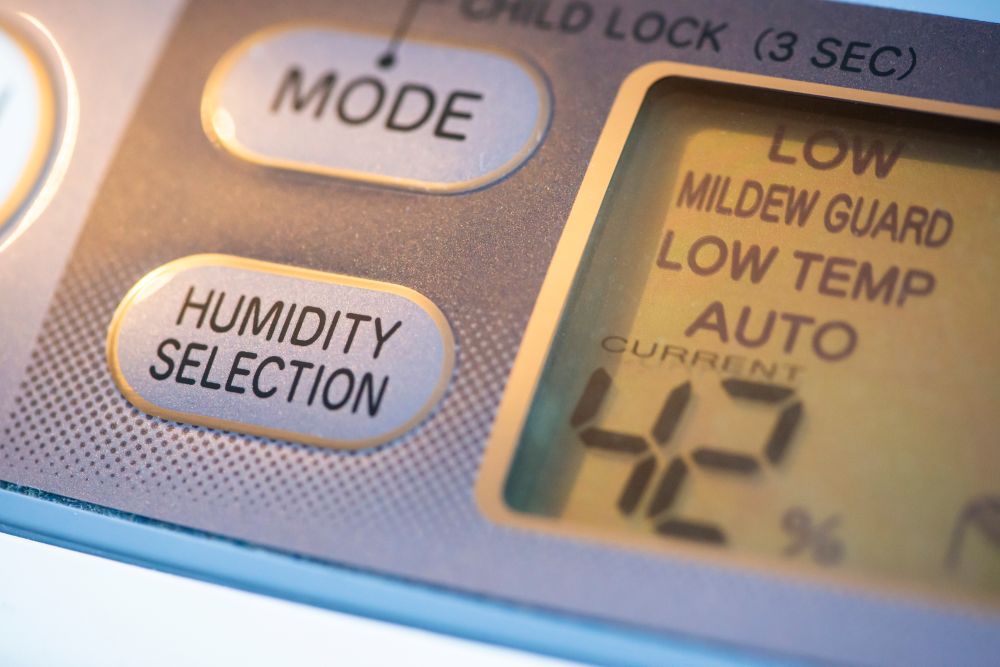
A portable dehumidifier is a small appliance designed to remove moisture from the air in a single room or localized area. They’re usually found in common living areas, such as bedrooms, bathrooms, laundry rooms, and basements.
These units pull humid air across refrigerated coils, condense the moisture into water, and release the drier air back into the room. The collected water typically gathers in a removable tank that must be emptied manually or drained through a hose.
Pros of Portable Dehumidifiers
Lower Upfront Costs:
They’re generally inexpensive compared to installing whole-house systems, making them a quick and accessible option for homeowners.
Easy Installation:
All it takes is plugging the cord into a standard electrical outlet. No HVAC modifications or professional installation required.
Mobility:
It’s in the name! These portable dehumidifiers can be moved from room to room to address specific humidity issues where needed.
Limitations of Portable Dehumidifiers
Despite their convenience, portable units have several drawbacks:
Limited Coverage:
Portable dehumidifiers can only treat the room they’re located in. They have little impact on humidity levels throughout the rest of the house.
Frequent Maintenance:
Water tanks often need to be emptied daily in humid environments.
Noise and Space Concerns:
Portable units take up floor space and can be noisy during operation. This can be especially annoying if you put one in your bedroom during the night.
Reduced Effectiveness in Larger Homes:
These smaller units struggle to control humidity across larger spaces and multiple rooms. The bigger the room, the less effective the unit.
For these reasons, portable dehumidifiers often act as temporary or localized fixes rather than a whole-home solution.
What is a Whole-House Dehumidifier?
A whole-house dehumidifier is installed directly into your HVAC system and works alongside your heating and cooling equipment. Instead of treating one room, it removes moisture from the entire air supply circulating through your ductwork.
These systems operate automatically whenever humidity rises above a preset level, ensuring consistent moisture control throughout the home.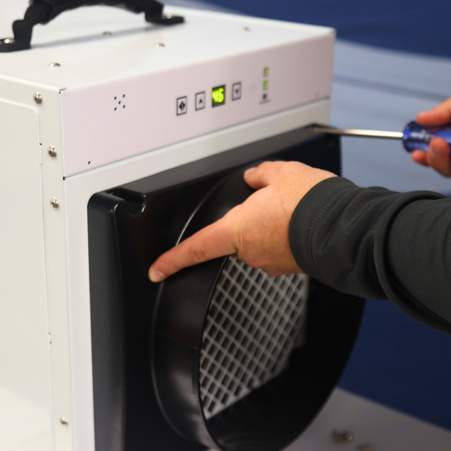
Pros of Whole-House Dehumidifiers
Whole-Home Humidity Control:
They treat all the air circulating through your HVAC system for consistent humidity levels in every room. These humidifiers can remove significantly more moisture per day than portable units.
Improved Indoor Air Quality:
Maintaining balanced humidity helps reduce mold spores, dust mites, allergens, and other contaminants. Consistent control across the house can improve air quality and overall comfort.
Automatic Drainage and Operation:
Whole-house systems drain automatically and operate through the HVAC system, eliminating the need to constantly empty tanks or move units around.
Quiet and Unobtrusive:
Because they’re installed within ductwork or mechanical spaces, whole-house dehumidifiers operate quietly and remain out of sight.
Energy Efficiency:
Balanced humidity allows your air conditioner to cool more efficiently. When moisture levels drop, the air feels cooler, meaning you may be able to raise your thermostat setting without sacrificing comfort.
Limitations of Whole-House Dehumidifiers
While whole-house dehumidifiers offer powerful, consistent humidity control throughout a home, they aren’t without tradeoffs.
Higher Upfront Cost:
They’re a major investment for your home. The cost of the equipment plus the professional installation can climb up to thousands of dollars. For homeowners on a tight budget, portable units seem more appealing.
Requires Professional Installation:
It’s a complex job, involving connecting the unit to return air ducts, installing a drainage line, adding a humidistat or control wiring, and ensuring proper airflow balance. It’s a job for a trained HVAC professional.
Not Portable or Flexible:
These systems are permanent fixtures within the HVAC system. They aren’t designed to target specific areas in the home; that’s what the portable units excel at.
May Require HVAC Compatibility:
Whole-house dehumidifiers rely on existing ductwork and airflow to operate effectively. If the house has limited or poorly designed duct systems, additional modifications may be necessary, which adds to the budget.
Whole-home systems are the best long-term solution for homes struggling with widespread moisture problems, but they’re overkill for small problems. If moisture problems are limited to a single area, like a bathroom or the basement, a portable unit may be a simpler and more cost-effective option.
Whole-House vs. Portable Dehumidifiers: Side-by-Side Comparison
Let’s look at a breakdown comparing the two choices.
| Feature | Portable Dehumidifier | Whole-House Dehumidifier |
| Coverage | Single room | Entire house |
| Installation | Plug-in appliance | Integrated with HVAC |
| Maintenance | Empty tank frequently | Automatic drainage |
| Noise | Can be noticeable | Quiet operation |
| Capacity | Limited moisture removal | High moisture removal |
| Convenience | Must move between rooms | Fully automated |
| Long-Term Effectiveness | Temporary solution | Permanent humidity control |
As you can see, portable units are great for small, isolated humidity problems. For example, they are especially in high demand during wildfire seasons where the quality of air can suddenly plummet from the blown over smoke and ash. Whole-house systems, on the other hand, are designed to solve constant humidity issues at the source.
Which Option Actually Solves the Problem?
The answer depends on the scope of the humidity issue.
Portable dehumidifiers work best when:
- Only one room has moisture issues
- You live in a small apartment
- You need a temporary or budget solution
Whole-house dehumidifiers are better when:
- Humidity affects multiple rooms
- Mold or condensation appears throughout the home
- Your HVAC system struggles to control moisture
- You want long-term comfort and air quality improvement
While effective in smaller living areas, portable units in larger homes often become inefficient because they must run constantly while only treating a small portion of the air.
Whole-house systems address the problem at the air circulation level, which is where humidity control is most effective.
The Field Controls Advantage
Field Controls has your home covered.
Field Controls whole-house dehumidifiers are designed to work directly with your HVAC system, providing consistent humidity control throughout the home, improved indoor air quality, automated operation, and reduced strain on air conditioning systems.
Portable dehumidifiers can help with localized moisture problems, but they rarely solve whole-home humidity issues. Because whole-home systems treat the entire airflow of the house, they deliver a level of moisture control that portable units simply can’t match.