| Home | About Us | Contractor Products | Resources | Homeowner Products | My Account |
![]() ![]() Facts About Indoor Air
Facts About UV
1. http://www.epa.gov/iaq/ - 5/16/01 2. http://www.epa.gov/iaq/asthma/intro/index.html#WhoGetsAsthma? - 5/16/01 3. http://www.epa.gov/iaq/ia-intro.html 4. “UVGI Design Basics” HPAC. January 2000. 5. EPA Guidance Manual Alternative Disinfectants and Oxidants. April 1999. 6. Jagger, J. 1967. Introduction to Research in Ultraviolet Photobiology. Prentice-Hall, Inc., Englewood Cliffs, NJ 7. Richard Riley, M.D. “Airborne Infection” The American Journal of Medicine, September 1974, Vol. 57 |
UV-AIRE® Air Purification SystemHow The In-duct UV-Aire Works
UV-Aire uses the energy from a specially designed, high-intensity UV-C lamp to reduce microorganisms in the entire home as they cycle through the HVAC system. Mounted inside the ductwork, the UV-Aire sterilizes or kills most contaminants as they pass the lamp.The process requires very little maintenance and costs just pennies a day to operate. The UV-Aire could be one of the best health and comfort investments a homeowner ever makes. Indoor Air Treatment With UVUV’s effectiveness in killing bacteria is directly related to a microorganism’s exposure time. Indoor air in a typical residential forced-air HVAC system will be recirculated 40-75 times a day. With a UV generating lamp mounted in the HVAC duct, cumulative exposure can be very effective in controlling indoor bacteria.UV rays will also kill germs that breed in drain pans and A-coils. Properly positioned, an ultraviolet system can significantly reduce indoor air contamination and prevent the growth of new microorganisms. The treatment of indoor air with ultraviolet radiation has been successful in health care facilities, food processing plants, schools, laboratories and other applications. It is safe, silent, and proven. Since direct exposure to UV light can cause skin cancer and blindness, the most practical application of UV light in the home or office is in the main air distribution (heating and/or air conditioning) system. As UV light will not pass through metal, glass, or plastic, a UV light can be installed in the main supply or return duct of a central heating or air system without concern for direct exposure to eyes or skin. This is an ideal location since the air in the home or office will pass through the HVAC system up to 75 times per day during normal operation, and as many as 150 times per day in continuous fan mode. Filter Systems Alone Don't Solve the ProblemThe majority of indoor air is conditioned by forced-air heating and cooling (HVAC) systems. Standard fiber air filters are entirely ineffective in trapping germs, as most particles are simply too small, passing through the porous filter. New, high efficiency style filters will only captureairborne bacteria down to a certain size. These high efficiency filters are nominally effective, trapping small airborne contaminants on the filter, creating a breeding ground where germs can continue to grow and multiply. HVAC systems are a dark and damp breeding ground for mold and bacteria, particularly at the system filter and air conditioning A-coil. The buildup of matter on the A-coil and filter can significantly reduce the efficiency of the appliance by constricting and reducing air flow. This means increased cost to the homeowner in addition to the risk of airborne pollutants. |
UV-AIRE® Air Purification SystemHow Much UV Energy is Required to Kill Bacteria?Most, if not all, bacteria can be destroyed by the use of UV light. The main factors in disinfection are the amount of UV power the lamp produces and the length of time the bacteria is exposed to the UV light source.The energy required to kill microorganisms is a product of the UV light’s intensity and exposure time. This energy is measured in microwatt seconds per square centimeter. Intensity x Exposure Time = microWatt seconds/cm2 Table 1 lists the amount of UV energy (measured in µW-sec/cm2) necessary to destroy various bacteria. Independent Lab TestingIndependent lab testing of the UV-Aire shows that in a single-pass air flow test, one 18-inch UV-Aire lamp can reduce levels of Serratia Marcescens (a typical bacteria) by 93%, while a two lamp system can reduce by 99%.1The calculated average UV energy output levels of a single UV-Aire lamp in an 18-inch square duct is 2,608 µW-sec/cm2 and 6,186 µW-sec/cm2 for a two lamp system. The 6,186 is comparable to the 99% energy required for Serratia Marcescens. It can be seen that there is a direct correlation between the UV-Aire UV lamp output and the observed kill rates in the lab.
Correlating The Lab Test With Other BacteriaUse the chart below to estimate the effectiveness of the UV-Aire with other bacteria.Harder to kill bacteria and molds require greater energy or exposure time to be as effective. For example, 99% reduction of Rotavirus requires 24,000 µW-sec/cm2 of UV energy versus 6,600 µW-sec/cm2 for Influenza virus (see table below). This means that Rotavirus spores are five times more resistant than Influenza. Consequently, Rotavirus spores will require five times the UV output energy from the lamp or five times greater exposure time. For practical purposes, we recommend trapping the spores in a high efficiency filter downstream of the UV-Aire which can be irradiated continuously with the UV-Aire lamp. For details of the lab test ask for form number 4291. 1. Efficiency of Bacterial Disinfection by a Duct- mounted UV-Aire® Air Purifier: by Microbe Management |
|||||||||||||||||||||||||||||||||||||||||||||||||||||||||||||||||||||||||||||||||||||||||||||||||
UV-AIRE® Air Purification System
|
||||||||||||||||||||||||||||||||||||||||||||||||||||||||||||||||||||||||||||||||||||||||||||||||||||||||||||||||||||||||||||||||||||||||||||||||||||||||||||||||||||||||||||||||||||||||||||||||||||||||||||||||||||||||||||||||||||||||||||||||||||||||||||||||||||||||||||||||||||||||||||||||||||||||||||
UV-Aire® Air Purification System
|
||||||||||||||||||||||||||||
UV-Aire® Air Purification System
|
||||||||||||||||||||||
|
UV-AIRE® Air Purification SystemThe Whole House Solution
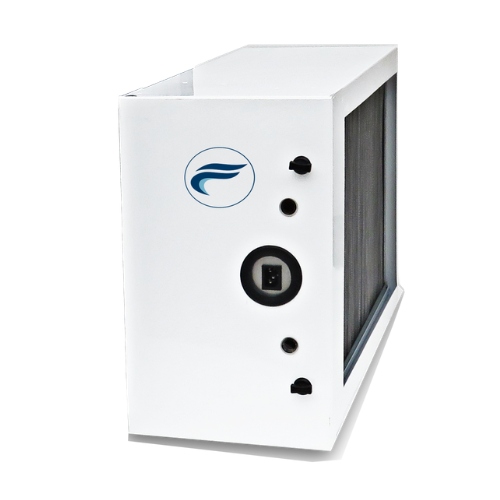
Field Controls offers a complete line of UV-Aire products for any home or business, with a variety of duct-mounted UV-Aire models designed for forced-air heating and cooling systems. UV-Aire germicidal lamps continuously attack airborne mold, bacteria and viruses as they circulate through your ductwork. |
UV-AIRE® Air Purification SystemIndependent Lab TestingFor many years, ultraviolet light has proven effective in sterilizing medical equipment, purifying water, and processing food. Currently, the use of UV light is gaining industry acceptance in HVAC applications. Microbe Management, Inc., a testing agency in Greenville, NC, has conducted three separate tests to examine UV’s effect on indoor air quality. The test results conclude that UV is an integral part of a whole house approach to improving Indoor Air Quality. Attack the SourceWhile experts disagree on the root causes of many IAQ problems, there is consensus that stopping problems at the source is crucial to long-term air quality improvement. First, the homeowner must eliminate any unwanted sources of moisture in the home, such as roof leaks, drainage problems, and crawl space moisture.
Surface Test: UV Kills and Prevents Mold on A-CoilsA specific test was designed to determine UV’s effectiveness in treating mold on coil surfaces. The test simulated the damp, dark settings where A-coils are found. In this study “We took a standard A-coil, sterilized it, introduced two kinds of mold, and then placed it in a controlled, moisture-laden environment,” says Bernard Kane, of Microbe Management. “We created two separate chambers in our lab. One chamber was bathed in UV light. The other was not.” The results were dramatic and conclusive. The side of the A-coil that was exposed to the ultraviolet light was clean and clear of mold growth. Mold continued to grow unabated on the side without UV. Subsequently, the contaminated side was bathed in UV light and the mold was eradicated. Kane summarized the results: “Properly positioning a UV lamp over the A-coil in a residential or commercial air conditioning system can eliminate surface mold on the coil and prevent future mold growth as well.” Airborne Testing: Single Pass and Cumulative TestsBacteria and viruses are introduced into the building by its occupants and often cannot be controlled at the source. Therefore, it is important to attack these airborne invaders early and often, before they have an opportunity to multiply. The single pass test proves that UV effectively kills these airborne microorganisms in the duct. |
Single Pass Test: UV Deadly for Airborne MicrobesThis study introduced a common bacterium into a galvanized air duct equipped with a UV light to determine how effective the lamp would be in reducing the bacteria with one exposure, or a “single pass.” The tests were conducted at two speeds: 1125 cfm and 2250 cfm in an 18" x 18" duct. The UV lamp yielded at least a 90% reduction of the test bacteria with a single airflow pass at 1125 cfm, and at least 71% reduction at 2250 cfm. Cumulative Tests: Multiple Exposures Dramatically Improve IAQTo further investigate the effectiveness of UV on indoor air quality, Microbe Management created a series of tests designed to measure the cumulative effect of UV in reducing airborne contaminants. The tests were performed in a structure with two isolated 8' x 8' x 8' rooms where air could be sampled. In the control room, no UV was present, while the other room utilized a portable UV air purifier. According to Bernard Kane, Ph. D., of Microbe Management, “Test results were very encouraging. In both rooms, we introduced a resistant, spore-forming bacteria until the air was saturated with 350 colonies per cubic foot. In the room with the portable UV unit, the spore count was reduced by 50% in just 10 minutes and by 98% within 30 minutes. In the control room, without UV, more than 85% of the bacteria were still active after thirty minutes.” Similarly, the leading consumer UV “tower” model was also tested, but showed only minimal effectiveness. (See chart below.) ![]() Conclusion: UV Is An Effective Part of “Whole House” SolutionA-coil irradiation, single pass, and cumulative tests confirm that UV is an important and effective contributor to a healthier home environment. UV technology used with a quality filter (MERV rated 8 or higher) will dramatically improve Indoor Air Quality. Additionally, portable units can be used in combination with in-duct models. This combination is strongly recommended for individuals with depressed immune systems, asthma, allergies, or other respiratory conditions. For homes without forced-air, portable UV air purifiers are recommended to enhance IAQ. Also, health care professionals, teachers, and day-care workers can benefit from additional UV protection from influenza and other viruses. |
Compare
|
|
|