

What’s That Smell? Understanding What’s Behind Household Odors
Every home has its own collection of familiar smells. Freshly brewed coffee. Dinner cooking in the kitchen. Your favorite candle. Each of these smells can make a space feel warm and inviting.
But not every household odor is welcome. Lingering cooking smells, smelly pets, musty basements, and chemical fumes can quickly make even the cleanest home feel uncomfortable.
While many homeowners reach for air fresheners, scented candles, or cleaning sprays to eliminate unwanted smells, these solutions often provide only temporary relief. The real problem may be hiding in the air itself.
Household odors can come from a variety of sources, including airborne particles, volatile organic compounds (VOCs), moisture, and biological contaminants. Understanding what causes these smells, and why they linger, is the first step toward creating a cleaner, fresher indoor environment.
Fortunately, homeowners have several options for addressing odors at their source, including improved ventilation, proper HVAC maintenance, and advanced whole-house air purification technologies.
What Actually Causes Household Odors?
Most household odors are caused by molecules released into the air from everyday activities, materials, and biological processes. When these molecules reach receptors in your nose, your brain identifies them as a particular smell.
Some odors disappear quickly, while others linger because their source continues releasing compounds or because odor molecules have settled into carpets, furniture, curtains, and other household materials.
Common sources of household odors include:
- Cooking oils, grease, and food particles
- Pets and pet-related waste
- Mold and mildew
- Tobacco smoke
- Household cleaning products
- Paints, adhesives, and furnishings
- Garbage and food waste
- Dirty HVAC components
- Excess indoor moisture
Although an unpleasant smell doesn’t always indicate a health hazard, persistent odors can sometimes signal underlying indoor air quality concerns that deserve attention.
Cooking Odors: More Than Just the Smell of Dinner
Cooking is one of the most common sources of household odors.
Frying, grilling, roasting, and sautéing can release airborne particles, grease droplets, and gaseous compounds. Strong-smelling foods such as garlic, onions, and fish can also release odor molecules that spread well beyond the kitchen.
Without adequate ventilation, these contaminants can circulate through the home and settle on nearby surfaces. Over time, grease and cooking residue may accumulate on cabinets, walls, curtains, and furniture, allowing odors to linger long after the meal is finished.
How to reduce cooking odors:
- Use a range hood that exhausts outdoors whenever possible.
- Turn on ventilation before cooking and leave it running afterward.
- Clean stovetops, backsplashes, and range hood grease filters regularly.
- Keep food waste in sealed containers.
- Avoid allowing grease and food residue to accumulate.
While ventilation helps remove pollutants during cooling, air purification can provide additional treatment for particles and certain gaseous compounds that remain indoors.
Pet Odors: Managing Everyday Household Companions
Pets bring plenty of joy into a home, but they can also introduce persistent odors. Pet-related smells may come from natural skin oils, saliva, bedding, litter boxes, accidents, and other organic materials.
Pet hair and dander can also accumulate on furniture, carpeting, and HVAC filters. When these materials aren’t removed regularly, odors may become increasingly noticeable, particularly in smaller or poorly ventilated spaces.
How to reduce pet odors:
- Wash pet bedding frequently.
- Vacuum carpets and upholstery using a vacuum with effective filtration.
- Clean litter boxes and pet areas regularly.
- Address accidents promptly using appropriate cleaning products.
- Replace HVAC filters according to manufacturer recommendations.
Air purifiers with activated carbon can provide additional support by capturing certain odor-causing gases, while particle filtration helps reduce airborne pet dander.
Musty Odors: When Moisture Becomes the Problem
A persistent musty smell is often associated with excess moisture. 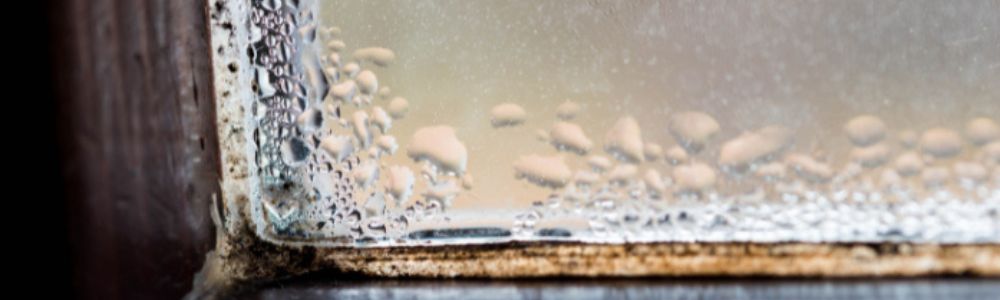 Basements, crawl spaces, bathrooms, laundry rooms, and other damp areas can develop conditions that support mold and microbial growth.
When moisture remains trapped in building materials or on surfaces, microorganisms may produce compounds responsible for earthy or musty odors.
These smells can become especially noticeable after heavy rainfall, during humid weather, or when a room remains closed for an extended period.
How to reduce musty odors:
- Repair plumbing leaks and water intrusion promptly.
- Maintain indoor relative humidity around 30% to 50%, as appropriate for the season.
- Use bathroom exhaust fans during and after showers.
- Consider dehumidification in moisture-prone areas.
- Inspect damp spaces for signs of mold or water damage.
Air purification may help reduce some airborne contaminants, but it can’t correct the moisture problem responsible for mold growth. Eliminating the moisture source remains essential.
Cleaning Products and VOCs: The Odors You Might Not Recognize
Some household odors come from chemicals released by everyday products. VOCs are gases emitted by certain liquids and solids. They can come from cleaning products, paints, adhesives, air fresheners, etc.
Some VOCs have noticeable odors, while others may be difficult to detect. Depending on the compound and exposure level, VOCs can contribute to eye, nose, or throat irritation and other health concerns.
Interestingly, products marketed to make a home smell cleaner can sometimes introduce additional chemicals into the air.
How to reduce chemical odors:
- Choose lower-emission products when available.
- Follow manufacturer instructions for cleaning products and paints.
- Store chemicals in tightly sealed containers.
- Avoid unnecessary use of scented sprays.
- Increase ventilation during activities that release chemical fumes.
Because VOCs are gases, standard particulate HVAC filters generally can’t remove them effectively. Specialized gaseous air-cleaning technologies may be needed for additional treatment.
Smoke and Other Persistent Household Odors
Smoke can be particularly difficult to eliminate  because it contains a complex mixture of particles and gases. Whether the source is tobacco, a fireplace, cooking, or outdoor wildfire smoke, contaminants can remain suspended in the air and settle on household surfaces.
Smoke-related odors may become embedded in carpets, upholstery, curtains, and other porous materials. Even after the original smoke source disappears, these materials can continue releasing unpleasant smells.
How to reduce smoke odors:
- Eliminate indoor smoking and unnecessary combustion sources.
- Use appropriate ventilation when outdoor conditions permit.
- Clean affected fabrics and surfaces thoroughly.
- Replace HVAC filters when needed.
- Consider air purification technologies designed to address both particles and certain gaseous pollutants.
Persistent smoke odors often require a combination of source removal, cleaning, ventilations, and air treatment rather than a single solution.
Why Traditional HVAC Filters Can’t Eliminate Every Odor
Your HVAC system continuously circulates air throughout your home, making filtration an important part of maintaining indoor air quality. However, most standard HVAC filters are designed primarily to capture airborne particles.
Depending on their efficiency rating, these filters can capture dust, pollen, pet dander, and other particulate contaminants. The challenge is that many household odors are caused by gases rather than particles.
These odor-causing molecules can pass through conventional particle filters and continue circulating throughout the home. That’s why homeowners dealing with persistent odors may benefit from additional air treatment technologies designed specifically for gaseous pollutants.
How Carbon Filtration and PCO Help Reduce Odors
Two technologies commonly used to address odor-causing gases are activated carbon adsorption and photocatalytic oxidation (PCO).
Activated Carbon Adsorption
Activated carbon contains a network of microscopic pores that provide a large surface area for capturing certain gaseous pollutants. As contaminated air passes through carbon media, some odor molecules and VOCs attach to the carbon surface through a process called adsorption.
This can help reduce odors associated with cooking, pets, smoke, and household chemicals. Unlike scented products, activated carbon doesn’t simply cover unpleasant smells with fragrances.
Photocatalytic Oxidation (PCO)
PCO takes a different approach by using ultraviolet light and a specialized catalyst to trigger chemical reactions. As certain gaseous pollutants pass across the activated catalyst, oxidation reactions can break down odor-causing compounds into simpler substances.
PCO effectiveness depends on the pollutant, exposure time, airflow, and system design. Properly engineered systems can complement carbon adsorption by targeting some compounds that traditional particle filtration can’t address.
Combining these technologies creates a layered approach to reducing household odors.
How DUOMAX Helps Treat Your Home’s Air
Household odors don’t always stay confined to the room where they originate. 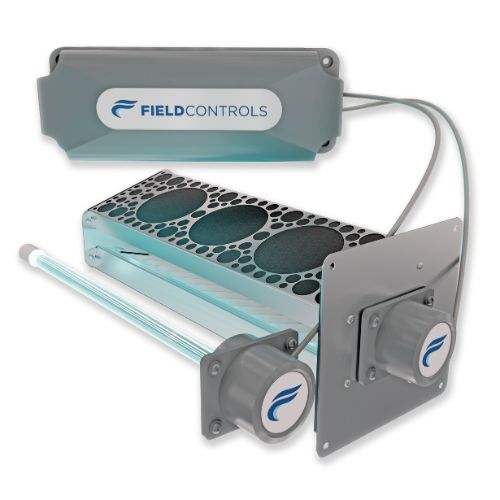 Cooking smells can spread into bedrooms, smelly pets move throughout shared living spaces, and gaseous pollutants can circulate whenever your HVAC system operates.
That’s why whole-house air treatment can be an effective complement to routine cleaning and ventilation.
The Field Controls DUOMAX Whole House Air Purifier is designed to integrate directly into a home’s HVAC system, treating circulating air rather than relying exclusively on individual room purifiers.
DUOMAX combines multiple air treatment technologies to help address different indoor air quality concerns.
AirFresh Carbon Odor Adsorption
DUOMAX incorporates AirFresh carbon technology to capture certain odor-causing gases and VOCs as air moves through the system. This helps reduce lingering smells rather than simply masking them with fragrances.
PRO-Cell PCO Technology
Field Controls’ proprietary PRO-Cell technology uses UV light and a catalytic surface to help break down certain VOCs and odor-causing compounds. This provides an additional treatment mechanism for gaseous pollutants that standard particle filters can’t effectively capture.
High-Intensity UV-C Technology
DUOMAX also uses high-intensity UV-C technology designed to reduce susceptible airborne microorganisms, including certain bacteria, viruses, and fungi. Although UV-C doesn’t directly eliminate every household odor, it adds another layer of air treatment that can support improved indoor air quality.
Whole House Air Treatment
Because DUOMAX is installed within the HVAC system, it can treat air circulating through rooms served by the central heating and cooling equipment. This allows homeowners to incorporate air purification into their existing HVAC infrastructure without relying solely on portable devices.
By combining carbon adsorption, PRO-Cell PCO technology, and UV-C air treatment, DUOMAX offers a comprehensive approach to reducing certain airborne contaminants and household odors.
While no air purifier can replace proper cleaning, ventilation, or addressing moisture problems, DUOMAX provides an additional way to help maintain fresher indoor air.
Learn more about the Field Controls DUOMAX Whole House Air Purifier and discover how advanced air treatment technologies can help create a cleaner, more comfortable home.